

In the competitive landscape of the hygiene and personal care industry, the definition of a "quality product" has undergone a radical transformation. For a long time, functionality was the sole metric of success. However, today’s consumer is more demanding and more informed, and skin-friendliness, softness, and a consistently dry feeling are just as important as their fundamental function.
This shift has moved the market away from traditional, flat nonwoven materials toward sophisticated, three-dimensional structures. Texture is no longer just an aesthetic choice; it is a sensory cue for premium quality, softness, and skin health. To stay ahead, manufacturers must provide materials that are extremely absorbent, skin-friendly and gentle, all at the same time.
To help nonwoven producers all around the world achieving this challenging objective, A.Celli, the experts in high-speed web winding, and SAUERESSIG, a global leader who set standards in surface finishing, texturing, and machine development, joined forces. Together, we have created VoluMAX³, a solution designed to perform embossing and aperturing in a single step, giving birth to softer, drier and, ultimately, better products.
Understanding the Essentials: Embossing and Aperturing
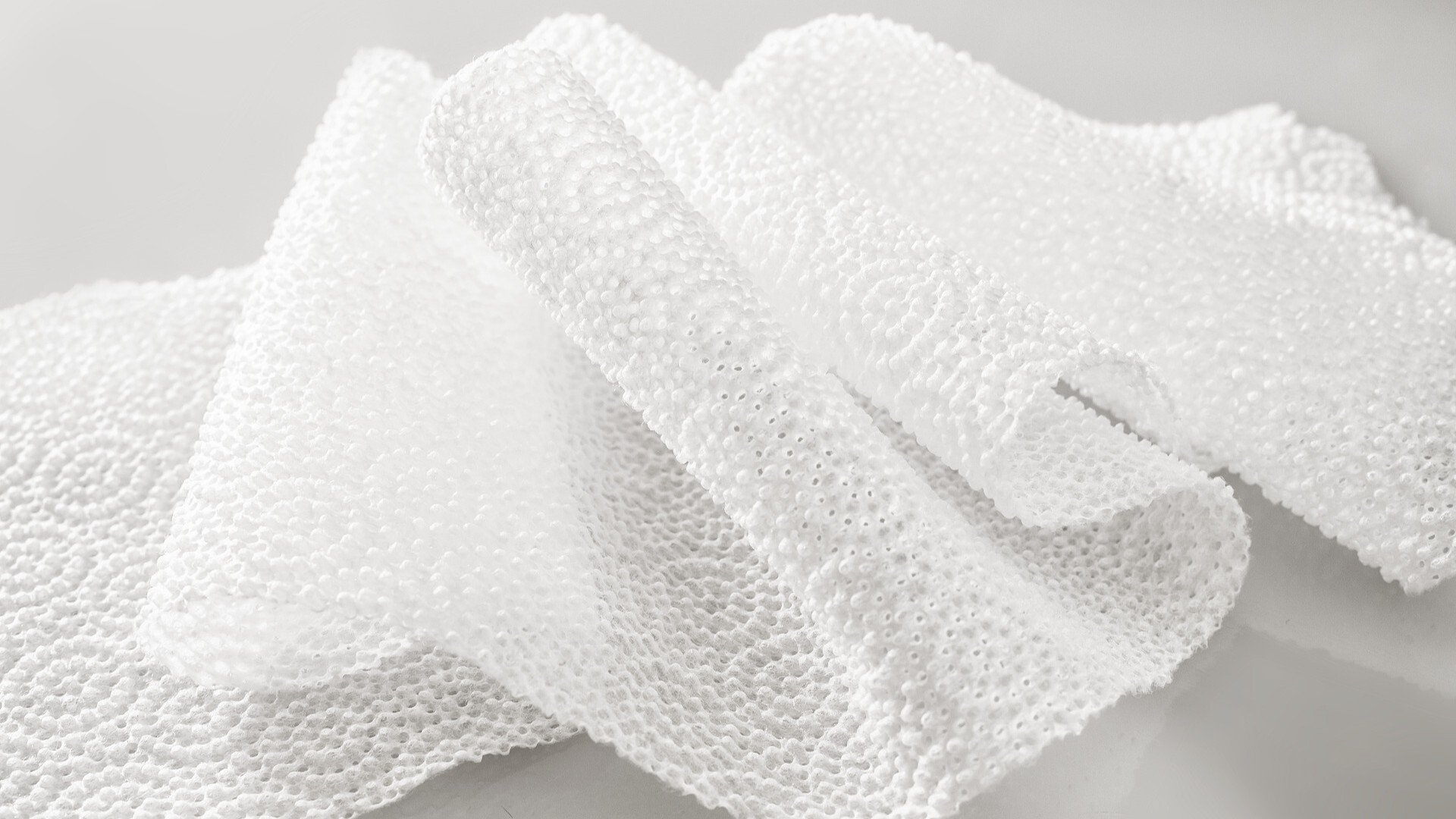
3D Embossing is the art of using heat and pressure to create permanent, raised, or recessed designs on a fabric. While it certainly improves the visual appeal, its primary value lies in its ability to increase the "bulk" or thickness of the material without adding weight. This creates a "soft touch" that mimics traditional textiles, making products feel less like plastic and more like cotton, which is essential for products intended for prolonged skin contact.
Aperturing, on the other hand, is a process of creating precise micro-perforations or "holes" in the nonwoven web. In the hygiene sector, the resulting apertures serve various purposes:
-
Allow quick passage of fluids through the top sheet to the absorbent core and help keep the surface dry by minimizing fluid backflow.
-
Allow air to pass through, improving skin comfort and reducing the risk of irritation.
-
Improve user comfort and perceived quality
-
Enhance the product's visual appeal
From baby diapers and sanitary pads to adult incontinence products and premium wipes, these advantages transform a commodity material into a high-end consumer good.
The Industrial "Pain Points": Why High Quality is Hard to Achieve
While the benefits of embossing and aperturing are clear, achieving them at an industrial scale presents significant challenges. Many manufacturers find themselves trapped in a trade-off between speed and quality.
One of the most persistent issues is the speed barrier. Most conventional aperturing technologies lose precision as the line speeds up. At high velocities, the pattern definition often blurs, or the fabric suffers from "bruising", that is mechanical damage to the fibers that weakens the overall web.
Another critical concern is metal abrasion. In traditional setups, manufacturers often use rollers made of softer materials like brass. Over time, the friction of high-speed production causes microscopic metal particles to flake off. In the hygiene industry, this is a major liability, as these particles can contaminate the end product, causing skin irritation or allergies for the consumer. Furthermore, metal abrasion can accumulate within the machinery, increasing maintenance needs and risking non-compliance with international standards like ISO, OEKO-TEX, or FDA.
Finally, there is the issue of downtime. Many systems require the entire production line to stop for roller maintenance or pattern changes. In a high-volume industry, every minute of halted production represents a significant loss in revenue.
Introducing VoluMAX³: The Single-Step Innovation
VoluMAX³ is a stand-alone line engineered specifically to solve these industrial headaches, giving you the best possible product quality, for the hygienic and many other markets, without sacrificing efficiency.
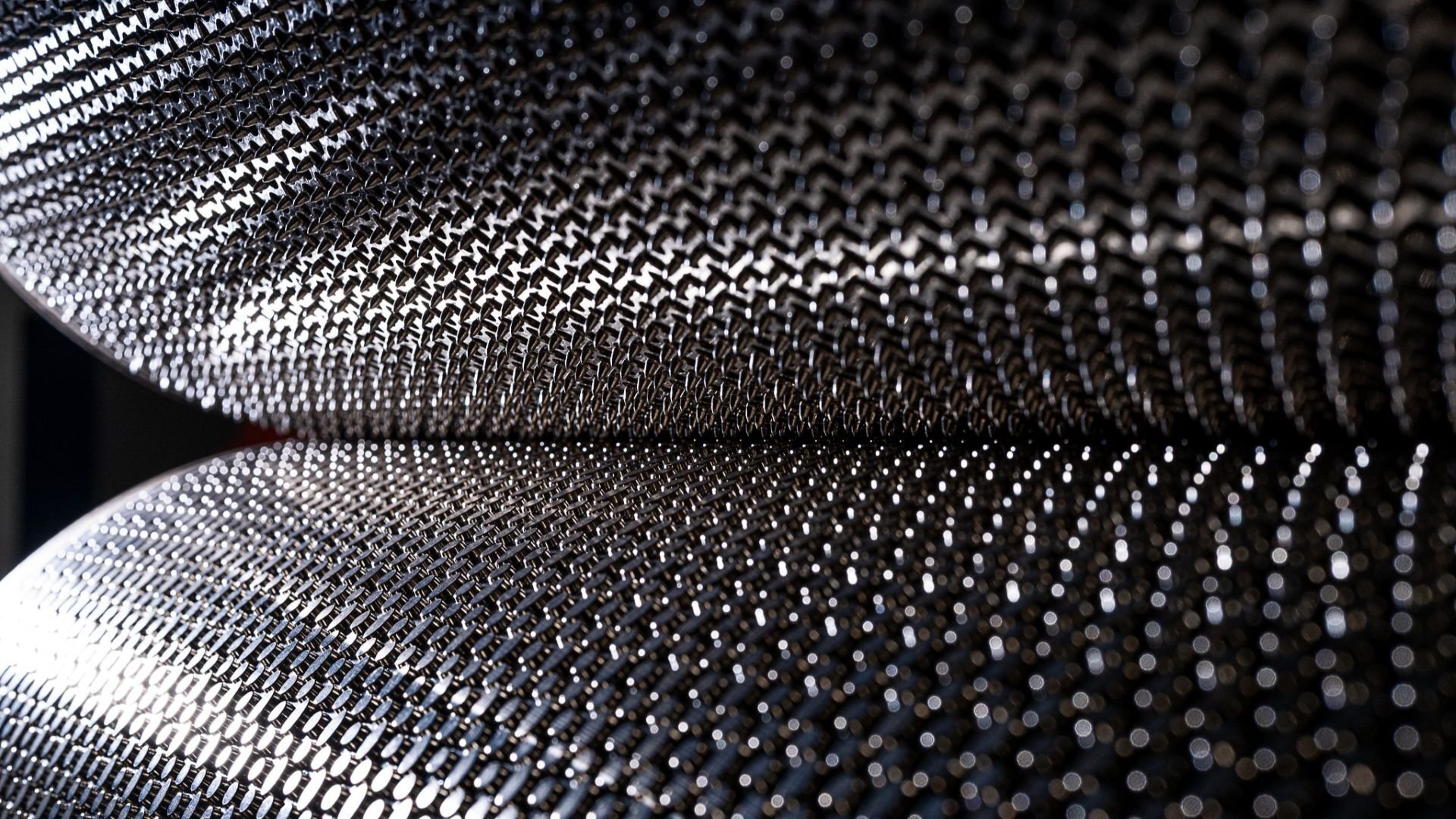
The primary innovation of VoluMAX³ is its ability to perform 3D embossing and aperturing in a single step. This is made possible through advanced "male/female" engraving technology: instead of multiple passes or separate units, the VoluMAX³ rollers compress and pierce the material simultaneously with surgical precision. This ensures that the texture and the holes are perfectly aligned, creating a cohesive, high-performance structure.
Furthermore, the technology is specifically designed to handle the complexities of multi-layer and composite nonwovens made from combinations of natural and man-made fibers, ensuring detailed and repeatable definition across complex material structures.
Technical Superiority: The Power of 42CrMo4 Steel
At the heart of VoluMAX³ are its rollers, made with 42CrMo4 heat-treated steel instead of traditional brass. While steel is more complex to process initially, its benefits for the manufacturer are transformative:
-
Lifespan: The high strength and wear resistance of steel mean these rollers last significantly longer than their brass counterparts, even under the stress of continuous, high-speed operation.
-
Safety and Cleanliness: Steel virtually eliminates the risk of metal abrasion. This ensures that the final hygiene products meet the strictest cleanliness standards, protecting both the consumer's skin and the manufacturer's reputation.
-
Thermal Precision: Steel maintains its mechanical stability even at temperatures up to 160°C. This allows for consistent thermal embossing and aperturing across the entire width of the web.
Speed and Efficiency: 600 m/min Without Compromise
In terms of productivity, VoluMAX³ sets a new industry benchmark. It operates at a maximum speed of 600 m/min and handles web widths up to 1,200 mm. To put this in perspective, this is 8 to 10 times faster than many competing solutions currently on the market, particularly those from suppliers who struggle to maintain pattern integrity at such high velocities.
To ensure that the 3D structure remains permanent after the fabric is wound, VoluMAX³ features an integrated air-cooling channel located directly after the aperturing unit. This "sets" the pattern instantly, preventing the 3D texture from being crushed or flattened during the high-tension winding process.
Standalone Flexibility vs. Integration
A common debate in the industry is whether to integrate embossing units directly into a diaper-converting machine or to use a standalone line. VoluMAX³ is designed as a standalone solution, which offers several strategic advantages:
-
Consistent Quality: Because the line is dedicated to texturing, it can maintain constant tension and pressure regardless of the fluctuations in a larger converting line.
-
Reduced Downtime: Maintenance can be performed on the VoluMAX³ line without halting the primary production, leading to higher overall equipment effectiveness (OEE).
-
Market Versatility: A standalone line allows manufacturers to process materials for a variety of industries, from hygiene to medical and filtration.
-
Supply Chain Versatility: The line enables roll-goods producers to add functional and aesthetic value directly at the material level. This offers converters increased flexibility, as they can use pre-embossed materials that can be easily processed in different widths for various product lines.
Sustainability and Resource Efficiency
In today’s market, high performance must go hand-in-hand with environmental responsibility. VoluMAX³ contributes to a more sustainable production approach in several ways:
-
Material Weight Reduction: The precision of the 3D structuring allows manufacturers to maintain the perceived thickness (bulk) of a product while reducing its actual basis weight. This lowers material consumption without compromising user experience.
-
Waste Minimization: By using a single integrated process step with continuous unwinding and winding, the line minimizes material loss and reduces scrap rates.
-
Chemical-Free Enhancements: The improvements in softness and absorption are achieved through mechanical and thermal ingenuity rather than the addition of chemical surfactants or softeners.
Conclusion: A Partnership for the Future
The collaboration between A.Celli and SAUERESSIG represents the best of European engineering. VoluMAX³ allows manufacturers to deliver the softness, dryness, and breathability that the modern hygienic market demands, all while achieving unprecedented production speeds.
Interested in more information? Contact us: A.Celli and SAUERESSIG are ready to provide you with full specifications and help you identify the best solution for your specific needs.
If, on the other hand, you would like to test the embossing and aperturing of your material with the VoluMAX3 pilot line at the A.Celli plant in Italy, then fill out the form on this page!